Comparison
Super Clone vs Genuine Rolex: A Side-by-Side
By Avaa SmithMay 30, 20267 min read
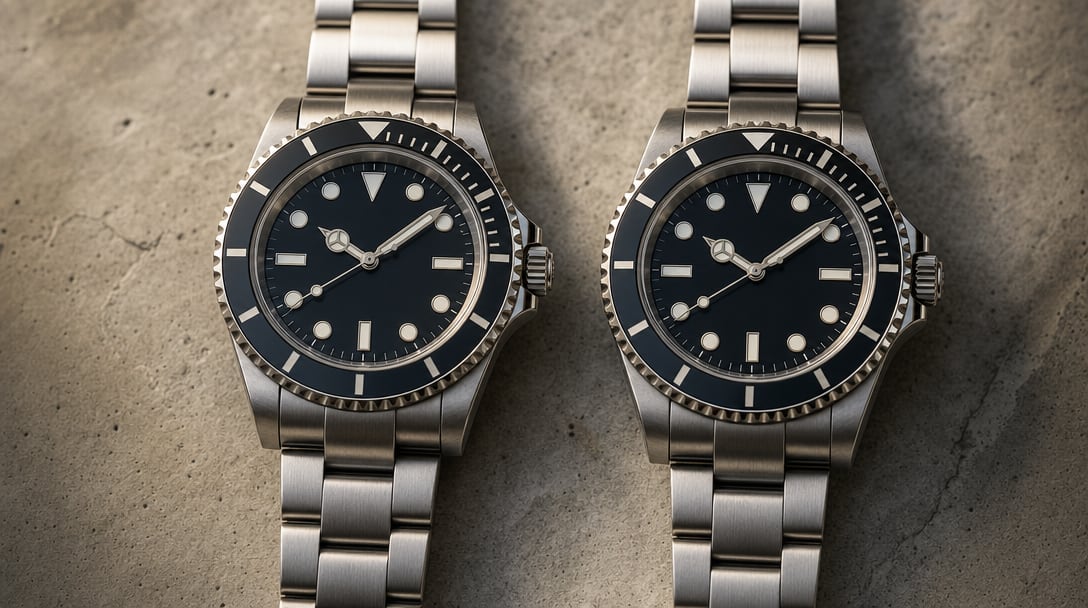
Put a top super clone next to its genuine counterpart and most people — including many enthusiasts at a glance — can't tell them apart. Put them under a loupe and on a scale, and the differences emerge. Here's where they match and where they don't.
Where the clone keeps up
Case shape and size, ceramic bezel gloss, dial layout, cyclops magnification, hand finishing and overall wrist presence: on a quality clone these are close enough that a casual comparison passes. The cloned movement sweeps like the genuine and, on the best pieces, runs the correct complication behaviour.
Where it falls behind
Movement finishing is the clearest gap — genuine Rolex movements show a level of decoration and consistency clones don't match. Solid precious metal is another: a 'gold' clone is plated or wrapped, so it loses on weight and wear. And the genuine carries paperwork, warranty and resale value a clone never will.
The verdict
A super clone wins on value and on freedom to wear without worry. The genuine wins on authenticity, finishing, materials and everything that happens after the sale. They're answering different questions — which is why comparing them only makes sense once you know which question is yours.
Browse the collection
Every Rolex super clone we carry, with its movement, factory and price.
View the collection →Frequently asked
Can people tell a super clone from a real Rolex?
At a glance, usually not — a top super clone matches the case, bezel, dial and cyclops convincingly. Under a loupe, the movement finishing, solid precious-metal weight and rehaut engraving are where the differences show.
More from the journal